
Heating water with gas is usually the second-largest source of emissions in a home. When it’s time to replace that old gas hot water tank, electrifying your hot water can be affordable without compromise.
Size up the tank - When going from a gas tank to an electric tank, since the reheat time can be about 50% slower, you may opt to recommended size up (e.g. from a 50 US gallon to a 60 US gallon tank).
Other Hot Water Options
Solar thermal, while a pretty neat technology, isn't as cost effective as the options above. Additionally, if you are switching off gas and powering your water and heating with electricity it’s best to use precious roof space to generate electricity with solar panels.
Gas on-demand hot water is quite popular but has a significant drawback from a climate perspective. The units are slim and wall mounted and they don’t spend energy to maintain the temperature of water sitting in a tank. Unfortunately, although they are energy efficient, every time someone turns on the hot water they emit a small puff of methane which is a much more potent greenhouse gas than CO2. Depending on the model and set-up, they can also take a significant amount of time to deliver hot water to the tap.
Electric on-demand hot water isn’t a recommended option. Sarah’s dad installed one at his cottage (he’s an energy nerd) but the showers there range from too cold to too hot. Electricity isn’t great at heating water quickly to a comfortable temperature which is why they aren’t that popular.
Hot Water
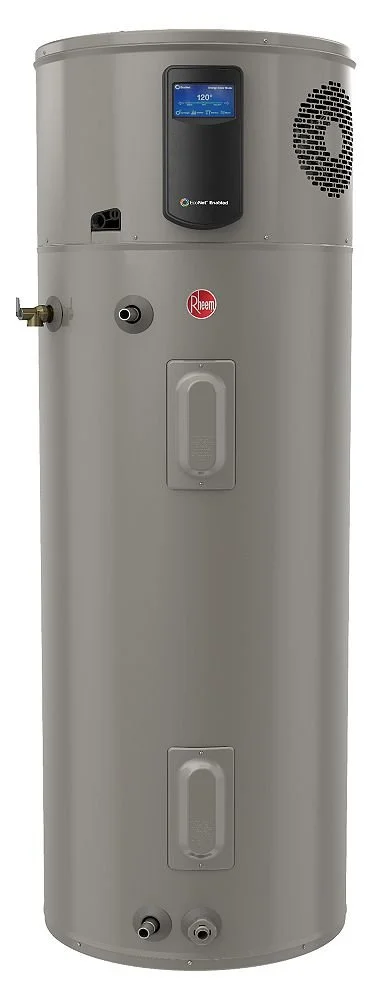
Heat Pump Hot Water Tanks:
Save your money to operate as they are four times more efficient than any other hot water heater.
Dehumidify the surrounding area (which is generally good in a basement).
Pump heat from the surrounding area. This means they cool down your mechanical room by a degree or so.
Wi-Fi-enabled settings include an option to turn off the heat pump function so that it can operate as a standard electric tank in colder months.
Need to be in a room that’s at least ten feet by ten feet or have grills on the door to allow for air exchange if the room is smaller.
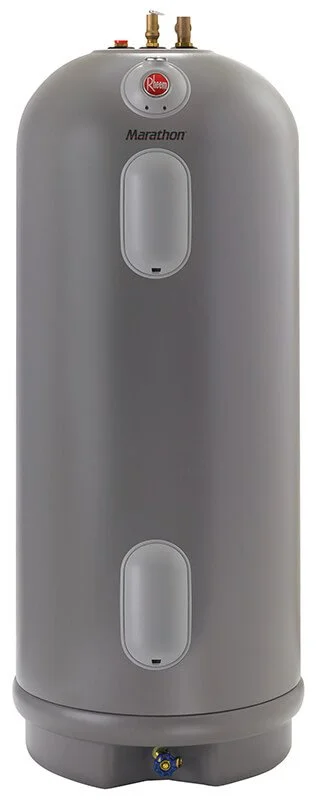
Standard Electric Tank with Timer and/or drain water heat recovery
Are well insulated to keep your water hot longer. Some brands offer a non-metalic tank that has a lifetime warranty as it’s made with a non-metallic, polybutene tank that resists corrosion.
The timer makes sense if your electricity is on time-of-use. They are set so that the tank only reheats when electricity rates are lowest (i.e. overnight) and can connect to an app on your phone.
Drain water heat recovery units recover the heat from hot shower water as it goes down the drain. This heat is used to pre-heat water as it enters the hot water tank so less energy is needed to heat the water. Installing this with an electric tank makes sense to bring down the operational costs.
A drain water heat recovery unit is a good fit for homes that have an accessible vertical drain pipe that is close to the hot water heater and it provides the most benefit to households where multiple people take showers. It can recover between 40% - 70% of the heat for free.